
 Schedule Tour

Why Quality Ratios Matter in the Long Run
When you’re comparing childcare options, it’s natural to look at the monthly tuition first. Every family has a budget, and nobody should feel bad about that. If you’ve ever asked, “Why is childcare so expensive?” you’re far from alone. But tuition is only part of the picture.
Two programs can look similar on paper and feel completely different once you understand what’s actually happening behind the number on the invoice, particularly when it comes to how many children each teacher is caring for, and how long those teachers tend to stay.
Why Is Childcare So Expensive, and Why Do Some Programs Cost Less?
Childcare is a people-driven service. The single biggest expense for any program is staffing, so when tuition is unusually low, it’s worth asking where that savings is coming from. Often, it means larger class sizes, more children assigned to each teacher, or lower pay for the educators in the room. None of this makes a lower-cost program a bad choice for every family. But it does mean the savings usually come from somewhere, and it’s worth knowing where before you enroll.
What Does a High Child-to-Teacher Ratio Actually Mean for Your Child’s Day?
A ratio is simply how many children one teacher is responsible for at a time. It sounds like a small detail, but it shapes almost everything about a child’s day. In a classroom with a high ratio, a teacher is often moving quickly from one need to the next: a scraped knee here, a mediated disagreement there, a lesson interrupted to manage the group. There’s rarely time left for a teacher to sit with one child, follow their lead in play, or notice the small moments that tell you how a child is really doing.
 At Kidspace, our preschool classrooms maintain a maximum of 16 children with a 1 to 8 teacher-to-student ratio, and our TK/Kindergarten program maintains a maximum of 18 children with a 1 to 9 ratio. Research consistently identifies child-staff ratios as a key structural quality indicator in early childhood programs. Children also spend regular small group time in our atelier and gym, in groups of just five or six, giving teachers even more room to work individually with each child. That kind of structure doesn’t happen by accident. It’s a deliberate choice about where to invest.
How Does Teacher Turnover Affect a Child’s Development?
Ratios are only part of the story. Who is in the room, and how long they stay, matters just as much. Research from the Federal Reserve Bank of Minneapolis has found that centers paying lower wages see meaningfully higher staff turnover than centers that invest more in their teachers, and that turnover isn’t just an inconvenience. Studies following children through the early years have found that kids who experience frequent changes in teachers tend to show fewer gains in language and vocabulary, along with more behavioral concerns, compared to children who have consistent, stable relationships with their educators.
That makes sense when you think about how young children learn. A three or four year old doesn’t just learn academic skills from a teacher. They learn to trust adults, to feel safe taking a risk, to ask for help when they need it. That kind of trust takes time to build, and it has to be rebuilt every time a familiar face leaves and a new one takes their place.
What Should Clark County Families Look for Beyond Price?
If you’re touring programs, a few questions can tell you a lot more than the tuition sheet. Ask how long the current teaching team has been together. Ask what the actual ratio looks like in the room you’d be touring, not just the licensed maximum. And pay attention to what you see: are teachers able to get down on the floor and engage with individual children, or are they mostly managing the group from a distance? A high-quality, low-ratio preschool in Clark County should be able to answer these questions clearly and without hesitation.
How Kidspace Invests in Staff, and What That Means for Your Child
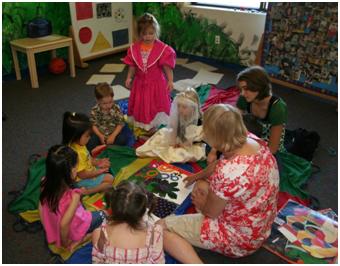 Kidspace has been part of the Vancouver, WA community for more than 25 years, founded in 1999 on the belief that children deserve more than supervision. They deserve teachers who know them well and stay long enough to watch them grow. Our owner is present in the building every day, and many of our teachers have been part of our community for years, which means the relationships your child builds here aren’t starting over each fall.
We also believe this investment should be visible, not just promised. Our low ratio childcare in Vancouver, WA is paired with a curriculum carrying Montessori influences, small group time in our atelier and gym, and daily exploration in our Outdoor Natural Playground. You can see how these pieces fit together, and what they cost, in our tuition guide, which we’re always glad to walk through in person.
Choosing childcare is one of the bigger decisions a family makes, and it deserves more than a quick comparison of monthly rates. If you’d like to see what a low ratio, stable teaching team looks like day to day, we’d love to show you around.
Childcare Cost and Quality FAQs for Vancouver, WA Families
Why does a lower child-to-teacher ratio matter so much?
A lower ratio means each teacher has more time and attention for every child, which supports stronger relationships, more individualized learning, and quicker response to a child’s needs throughout the day.
Is a more expensive childcare program always better?
Not necessarily, but price differences are rarely random. When you’re comparing programs, ask what’s included, what the actual ratios look like, and how long the teaching team has been together, rather than comparing tuition alone.
How can I find out a program’s real ratio, not just the licensed maximum?
Ask directly during a tour, and observe the classroom in person. A program confident in its ratios will be glad to walk you through exactly how many children and teachers are in each room.
Does teacher turnover really affect young children?
Research shows that children who experience frequent changes in teachers can see fewer gains in language development and more behavioral challenges than children with consistent, long-term educators.
What ratios does Kidspace maintain?
Our preschool classrooms maintain a maximum of 16 children with a 1 to 8 teacher-to-student ratio, and our TK/Kindergarten program maintains a maximum of 18 children with a 1 to 9 ratio.
How do I know if a program’s staffing is actually stable?
Ask how long current teachers have been with the program. A team that’s been together for years is one of the clearest signs of a healthy, well-supported staff.